
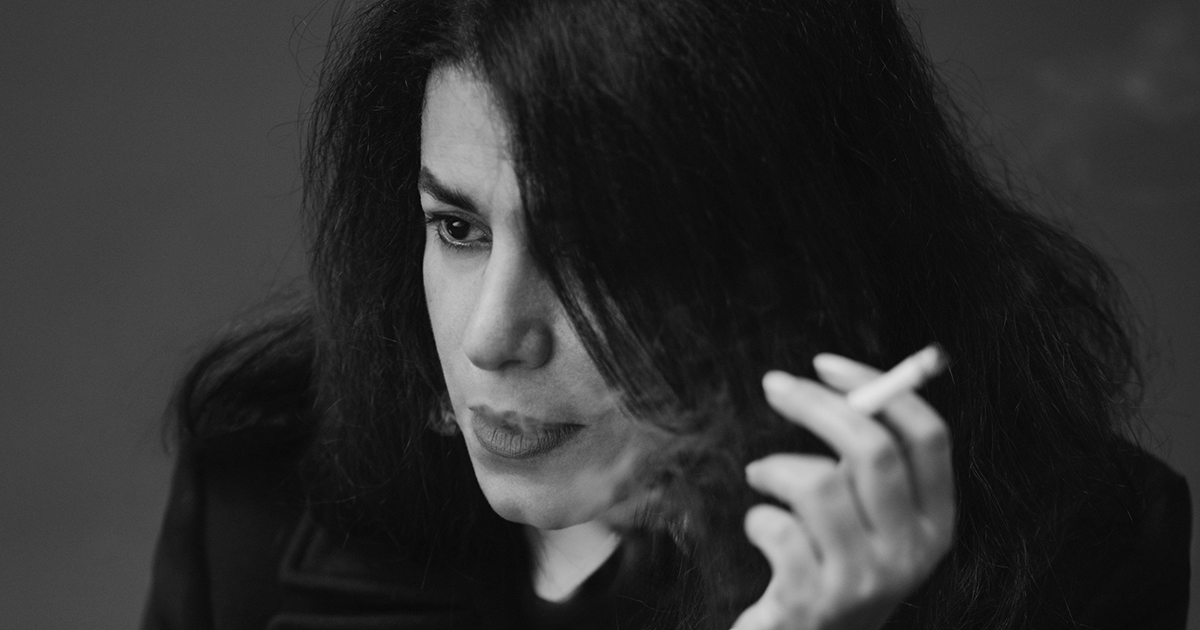
Marjane Satrapi is Dead
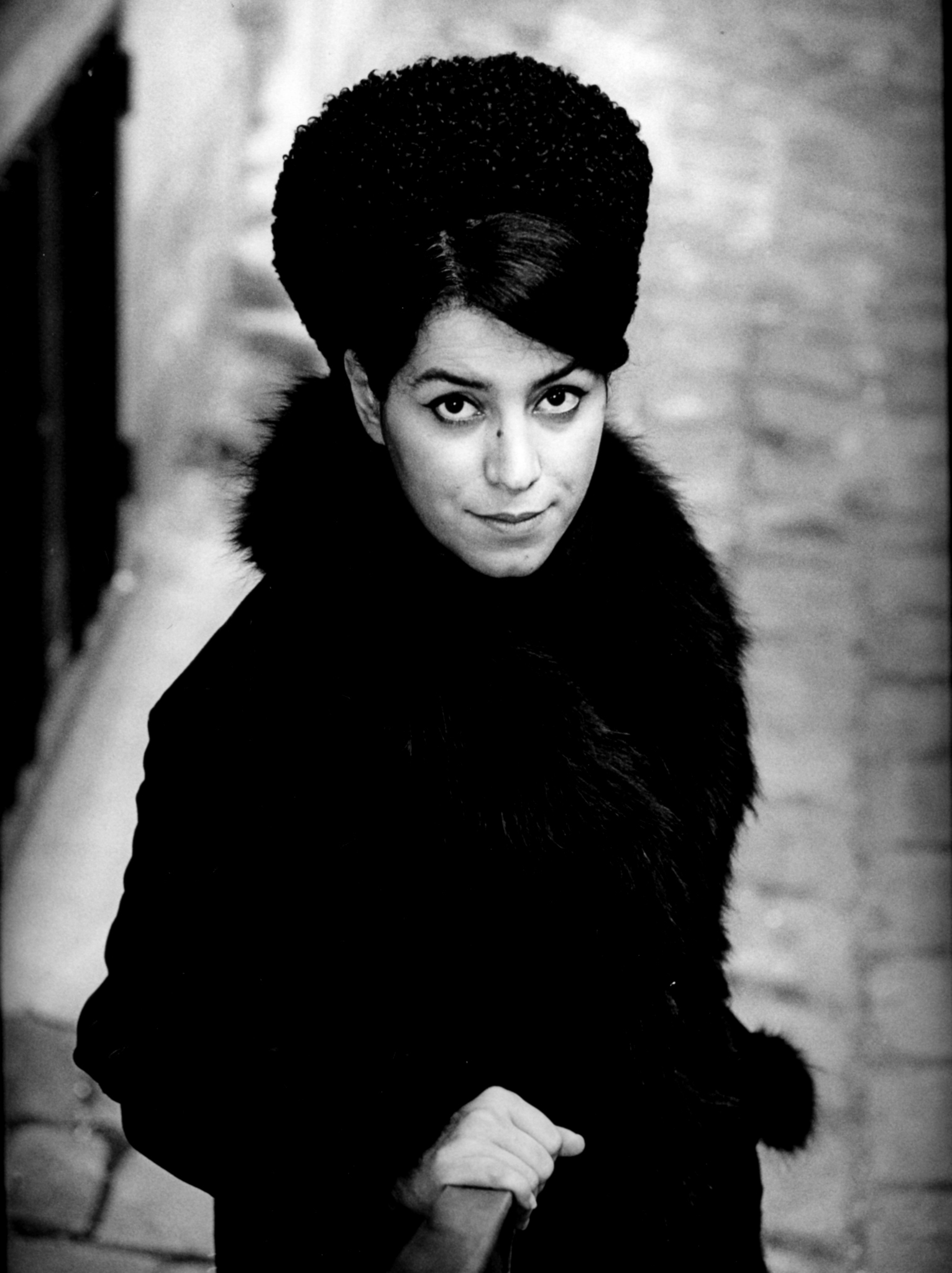
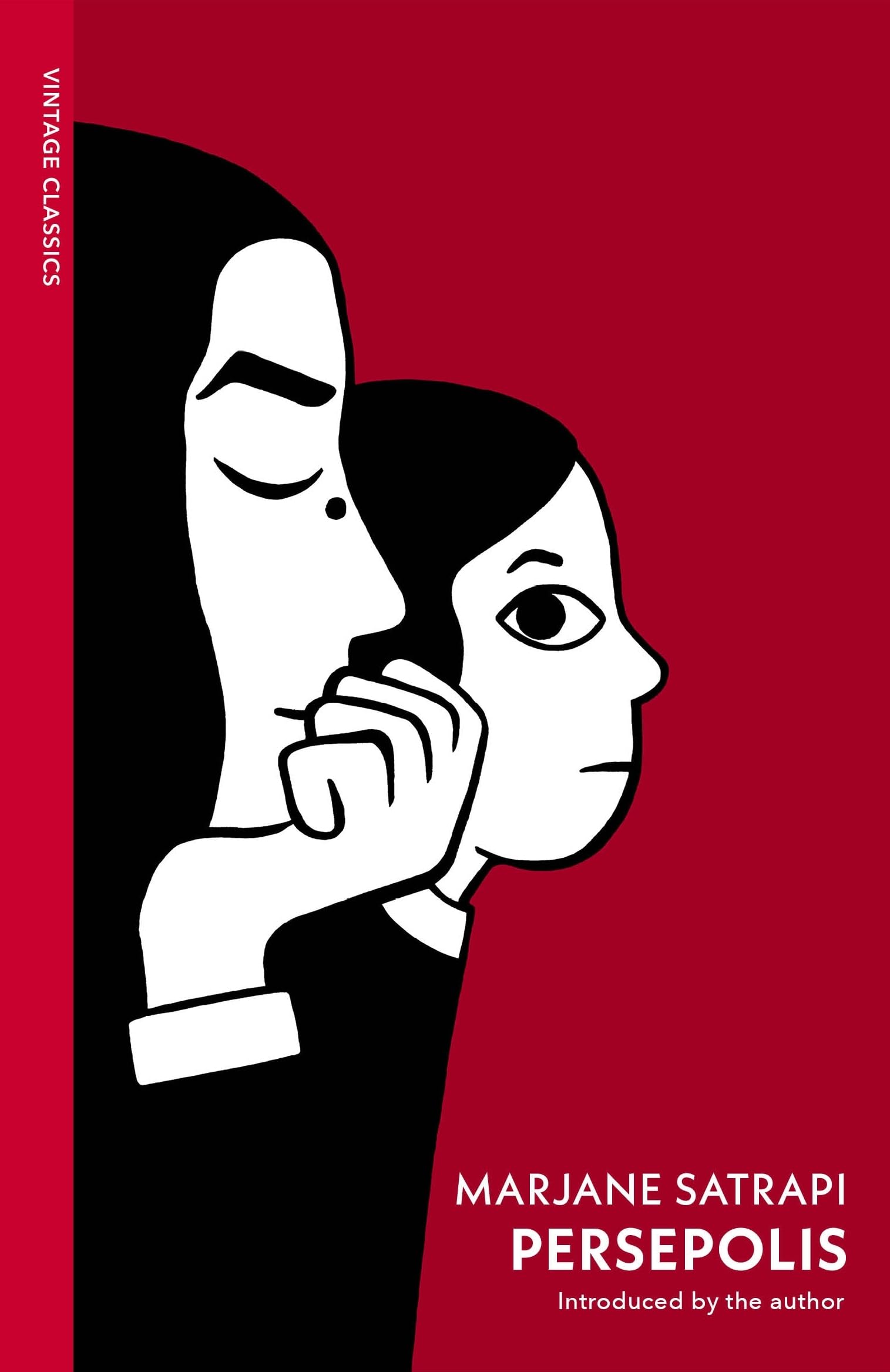
Persepolis (2000)
Author: Marjane Satrapi
Genre: Non-fiction graphic memoir
Publisher: Pantheon (20th Anniversary Edition)
Length: 352 pages
Part One
As usual, I got the news while doomscrolling at 4 AM. I made a small involuntary noise, put my phone down, and stared at the ceiling.
For a moment, it’s 2007 again. I’m sitting next to my mother in an ancient but charming theater on my college campus, watching the animated adaptation of Persepolis. It smells like ghosts and popcorn. Some of my happiest memories look like this: sitting next to her, watching a movie. My eyes are wet and burning.
Marjane Satrapi was born on November 22, 1969, in Rasht, Iran. She grew up in Tehran and died in Paris.
Her parents were activists who raised her to think critically about power, religion, and history. After the Islamic Revolution in 1979, the country she had known was replaced by a dictatorship. The changes were not abstract. They arrived in the form of dress codes, censored books, restrictions on music, and new rules about who could say what and to whom. She was ten years old.
By fourteen, her parents sent her to Vienna, fearing that her outspokenness would get her killed. That decision cost everyone involved something enormous. She arrived in Europe without the language, without her family, and without any clear sense of what her life would become. She moved through boarding houses and difficult living situations. She experienced homelessness. A scene from Persepolis implies potential sexual assault during this time in her life.
Satrapi returned to Iran after four years. During that time, she suffered from depression, attempted suicide, got married, and then divorced. After her divorce, she left again, this time for France. She settled in Paris and studied illustration at the School of Decorative Arts in Strasbourg.
Persepolis emerged from all of that accumulated experience. Published in France beginning in 2000, the graphic memoir was drawn in stark black and white. That visual choice carried political as well as aesthetic weight. The format stripped away the distance that narrative prose can create. Each stage of her life is fully fleshed out in relatable reality. A child watching her country change. A teenager navigating Europe alone. A young woman returning to a home that was unrecognizable.
The four volumes were collected into a single English edition that reached readers across the world. When the animated film arrived in 2007, it was received with the kind of attention that changes a life. Satrapi codirected the film with Vincent Paronnaud – it won the Jury Prize at the Cannes Film Festival that year. It was then nominated for the Academy Award for Best Animated Feature.
That an independent animated film drawn in black and white, rooted in Iranian political history and the story of one woman’s exile, could compete at that level said something about the force of the work. Ratatouille ultimately won the award, but the nomination placed her story inside a mainstream conversation it might otherwise never have entered. For many viewers, it was the first time they encountered that history in a format that was neither documentary or caricature.
She continued making films after Persepolis. Chicken with Plums was released in 2011, another adaptation of her own graphic work. The Voices came in 2014, starring Ryan Reynolds as a mentally ill serial killer. Radioactive followed in 2019, a biographical film starring Rosamund Pike as Marie Curie.
Then there’s her friendship with Art Spiegelman.
Spiegelman spent years developing Maus, a graphic memoir about how his father survived the Holocaust. Like Persepolis, Maus used the drawn image to carry a historical weight that straightforward realism might have made unbearable. Both works used autobiography as history without collapsing one into the other. Both arrived in a form some dismissed and others recognized as essential.
Spiegelman understood what Persepolis was doing before much of the literary world caught up. He recognized in it a formal kinship with his own project, a shared conviction that the comics form could hold catastrophe without flinching, and the friendship between them was grounded in that mutual understanding.
He spoke publicly about her work and treated her as a peer. That support mattered practically, in terms of how Persepolis was received beyond France. It also mattered symbolically. Spiegelman carried enormous authority in the world of literary comics, and his recognition of her work helped frame Persepolis as serious literature for audiences who might otherwise have dismissed an illustrated memoir.
Their work has faced similar institutional resistance. Maus was removed from school curricula in parts of the United States. Persepolis was challenged in school districts across the country, with objections centered on its depictions of violence, religion, and the body. Both responses told a consistent story: that the books had landed somewhere real, that they made visible something some readers preferred to keep invisible.
Satrapi herself was direct about such challenges. She did not soften her positions or adjust her language to accommodate discomfort. That quality ran through her public life as consistently as it ran through her work. It reached readers worldwide and was widely discussed for its clarity and moral focus. She used simple images and plain language to show how politics enters kitchens, classrooms, and bedrooms.
Marjane Satrapi died today at fifty six. Her family said she died of sadness. That is not a clinical diagnosis. It is a way to express the cumulative effect of grief, loneliness, and stress. Her husband, Mattias Ripa, died of cancer the previous year. That loss, combined with ongoing public crises, can break even the strongest spirit.
From 2024 through 2026, conditions inside Iran grew steadily worse. Multiple outlets documented continued repression: arrests and prosecutions of protesters, journalists, academics, and activists, alongside targeted violence against cultural and intellectual figures.
Regional tensions escalated alongside these internal crackdowns, approaching open conflict in some accounts by 2026. Observers noted expanded restrictions on civil society, tighter controls on cultural expression, and increased pressure on diaspora communities.
The pattern repeated in cycles: political shock, protest, arrests, then waves of reaction inside Iran and among diaspora communities abroad. International responses mixed sanctions, diplomatic statements, and limited interventions that changed little on the ground. Civilian suffering persists while global attention moves on, leaving local communities to absorb the impact long after the news cycle ended.
The last two years have been brutal for writers, scientists, and artists based in Iran. The steady stream of images from protests, executions, arrests, and sexual assaults has become a daily dirge. For someone like Satrapi, whose work was committed to calling out repression, the weight of personal loss layered over relentless public atrocity was something difficult to measure from the outside. Her obituaries reflect that connection directly.
Coverage of her death combines factual reporting about dates, awards, and adaptations with the family’s plain language of private grief. Both are necessary. The public record preserves achievements and influence. The family statement conveys what the official record cannot. Together, they tell a fuller story than either could alone.
Part Two
I grew up Persian in Texas. My grandparents and all seven of my father’s siblings are dead and buried in Iran. They’ll be reunited with my father soon.
The only family I have ever met on my father’s side were two aunts I rarely saw. They co-owned a beauty salon in Dallas. Once, during a brief visit, they told my father in Farsi that they wanted to fix my eyebrows. Their dazzling smiles were tight with concern.
My aunts meant well, but they were aware that I knew only two words of Farsi: one for water, the other was slang for a big penis. Despite this fundamental barrier, my heritage makes up half of my heart. Not speaking the language has never threatened that lifelong connection.
I am constantly mistaken for other nationalities – often Italian, sometimes Spanish. These misidentifications are usually flattering in their way, but deep down, I still want to be seen for what I actually am. Strangers address me differently because of it, and I am perceived differently in public, even though none of that changes who I am.
My parents’ marriage was difficult when I was a child. My mother is American, of German and Scottish descent. Like Marjane Satrapi, my father was born in Rasht and raised in Tehran. Any time they argued, my mother would take me to the local dollar cinema. She and I would sit through a movie together: Jurassic Park, One Hundred and One Dalmatians, Lassie, Black Beauty, Terminator 2. Then we would go home.
That pattern repeated over the years. Seeing Persepolis with my mother in college was different though. It was not about escaping turmoil. It was a beautiful hot day, and a visit to a cute theater with air conditioning sounded great.
A week after 9/11, my middle school French teacher took me and two other Iranian-American girls aside after class. An Iranian immigrant herself, she was worried about our safety. She saw something in my face and told me not to worry – no one would ever mistake me for being Iranian. I did not inherit my father’s math skills, mother tongue, or complexion. Only his humor, anger, and eyes.
I was thirteen then. I am thirty-eight now. The details of that classroom exchange stay with me to this day: a small crystal bowl of chocolates on the teacher’s desk, her beautifully applied eyeliner, the sleek shine of the other girls’ jet black hair next to my frizzy reddish brown.
I had a unibrow until high school. You can imagine how that went. My parents told me to leave it alone, insisting that a thick connected brow was a sign of beauty in Iran. Despite their pleas, I butchered my eyebrows for years. These conflicting beauty standards left behind constant humiliation in their bloody wake.
Don’t get me started on the rest of my body hair. I’ll just say this: full-body laser hair removal is worth every penny.
Worst of all, my father didn’t like dogs. Dogs were dirty. If you touch a dog, you had to wash your hands seven times to be truly clean. They were disgusting animals that lick their anus before jumping all over you, trying to lick your face. He refused to have one under his roof.
He hated how I fussed over the strays on our street. He didn’t like pampered pooches either – a toy poodle with a pink bow was still just another dirty animal in his eyes. It seemed like any time I touched a dog, a loud disgusted growl would come from his general direction. His fury was especially epic whenever he caught me hugging one.
My father’s maternal family were originally Zoroastrian, a faith that predates the Abrahamic religions and reveres dogs as sacred. My pretty Zoroastrian grandmother first met my Muslim grandfather on a train station platform. They eloped on a motorcycle later that day and had eight children. Only one was a girl.
I’ve been told that the little girl had blonde hair, blue eyes, and an angelic aura. After her death at the age of seven, my grandparents never spoke of her again to anyone, including their seven sons. She had been their second child. My father was their third. They never stopped trying for another little girl.
My grandmother had a Maltese when my father was a boy, and it sometimes slept in the bed with him and his brothers. He mentioned this fondly one day during a drive to the grocery store. My shock quickly turned into bewildered irritation: I was thirty-six and only now learning that this Maltese ever existed.
What the hell, my brain sputtered, that changes everything.
My grandmother would have grown up understanding dogs as protectors, as creatures that carry spiritual weight. Then she eloped, had eight children, and lost one of them. A blonde blue eyed little girl with an angelic quality, dead at seven. Was it punishment? My grandparents probably thought so.
After that, no one spoke of her again. Not to friends, not to neighbors, not even to the little boys who grew up in the shadow of that forbidden subject.
I wonder if the Maltese was how my grandmother held that grief. Not a replacement, but a small warm body to absorb something she could not say aloud. A creature that did not require explanation or language. My father, growing up in that house, would have understood without being told that the dog was connected to something heavy. Children absorb the emotional atmospheres of their homes without ever being handed a key.
It finally made sense. It hadn’t been religion or hygiene. Instead, it was something older, less nameable. A feeling learned in childhood that he carried into adulthood, into my childhood home, into the disgusted sound he made any time his little girl touched a dog.
He has never said any of this, of course, and this is all speculation. Still, I think about my grandmother and her Maltese, and how warmly my father told me that story – as if he really believed a dog sleeping in your bed was the most natural thing in the world.
Despite everything, my relationship with my father is full of love. I love his intelligence, his passion for music and art, his humor, how he was the life of any party. He worked hard under brutal conditions, often twelve hour days in a warehouse during the worst Houston summers, fixing machines that could easily take a finger or a life. His gritty work ethic is the foundation of every success I have had so far.
When I was eleven, the family that lived across the street from us got a new puppy – a Dachshund mix named Taz. Taz loved me. So much so, he would escape his backyard and make his way into ours on an every day basis. Seeing him pant happily at our back door was the best part of my day. That dog loved me so much that it inspired my father to walk across the street with an offer to buy Taz.
I remember being surprised when he did it, especially since I had stopped begging for a dog around that time. The daily backyard break-ins were enough for me. Taz spent so much time with me compared to his owners, I thought that they would be happy to have us take him off their hands. I was equally surprised when they refused.
Shortly afterwards, Taz disappeared. I never saw him again. A few days after he went missing, the children across the street told me how much they had hated the way their dog always ran to me when we stepped off the school bus. Never them. We didn’t play together anymore after that.
My feelings for my father have never been simple, and I have stopped expecting them to be. Learning the story of my grandmother’s Maltese did not absolve anything, but it made the hurt legible. I do not hold anything against him. What I carry forward is the image of him walking across the street to try to buy me a dog, quietly, genuinely wanting to do right by his daughter.
Marjane Satrapi’s work made room for that kind of combination. She documented cruelty and compassion without flattening one into the other. That approach stays with me as I think about identity and grief. Despite the personal pain that has come with it, I embrace my heritage and all of the history it carries. I will not let any single grievance become the whole story. I will finish my Farsi courses on Rosetta Stone next year.
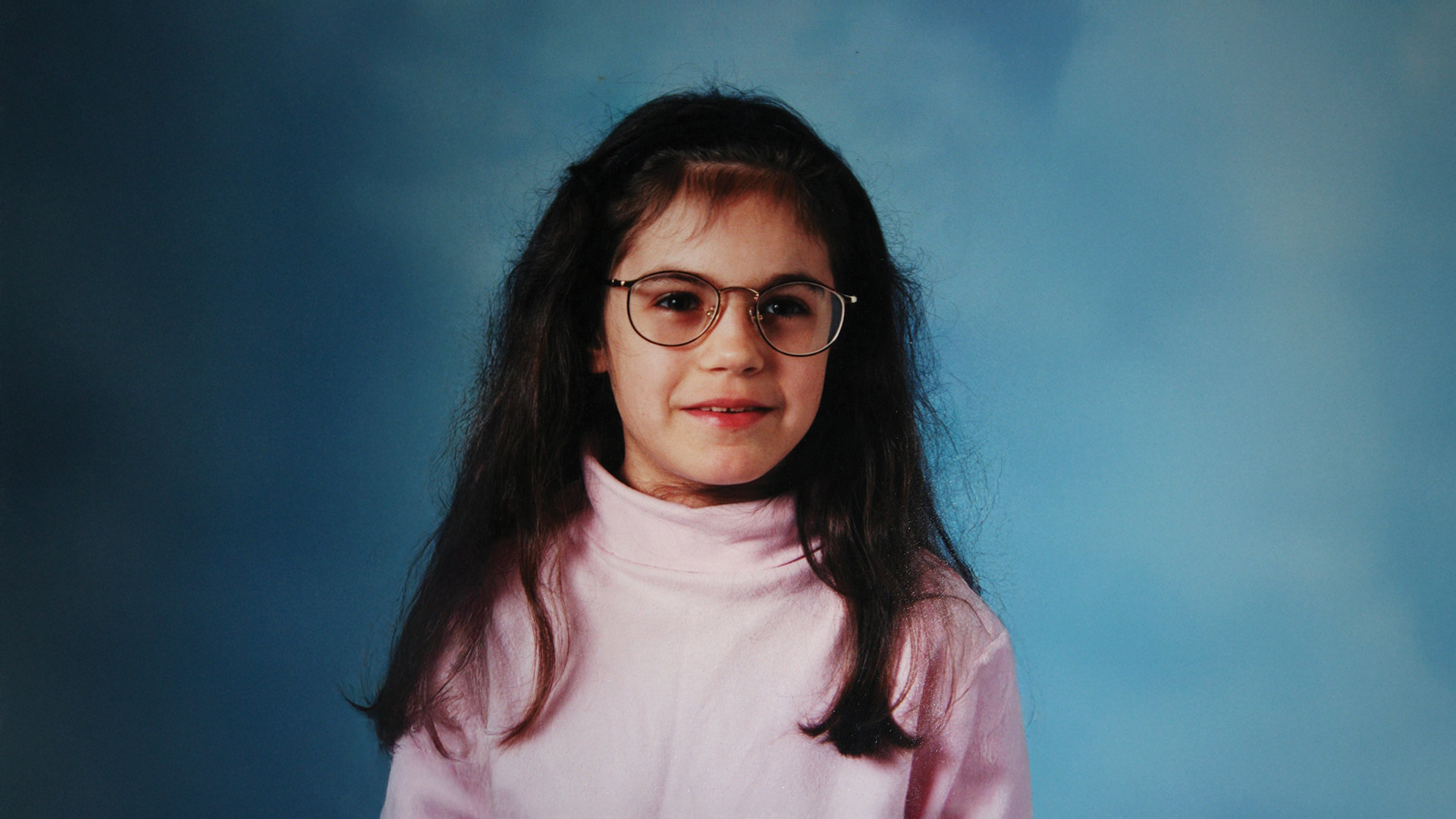
The author at seven years old (1995)